Make the next stop matter.
A stamp book gives pilots a simple way to build a collection of airport visits and keep exploring beyond their usual destinations.

AIRPORT STAMPS / FOR STATE AVIATION TEAMS
Give pilots a reason to choose your smaller airports, stay for a meal, and come back. Start with WingJockey’s digital stamp book, then shape a state program around airport visits and the communities they support.
Explore state participation See the pilot experience ↓Explore state reporting ↓A NEW CHAPTER FOR AIRPORT EXPLORATION
WINGJOCKEYAirport stamp book concept.
A SHARED REASON TO GET OUT THERE
For state aviation offices, airport associations, and tourism teams exploring a fresh way to connect with general aviation pilots.
A stamp book gives pilots a simple way to build a collection of airport visits and keep exploring beyond their usual destinations.
Missions gives pilots a wish list of airports to visit next. Each visit can become a starting point for another adventure.
State and national all-time leaderboards recognize verified stamps, bringing a shared sense of progress to airport exploration.
HOW IT WORKS TODAY
The current experience gives pilots a place to collect visits and plan what comes next.
Explore destinations and save airports to the Missions wish list.
Use GPS check-in at an airport to collect a verified stamp in the digital airport stamp book.
Verified stamps count toward the state and national all-time leaderboards. Manually added visits can record past experiences, but do not count toward competitions.
THE PILOT EXPERIENCE / ACTUAL PRODUCT SCREENS
A short look at the current UI, taken from a WingJockey product walkthrough. Screens are cropped and personal account details are hidden.
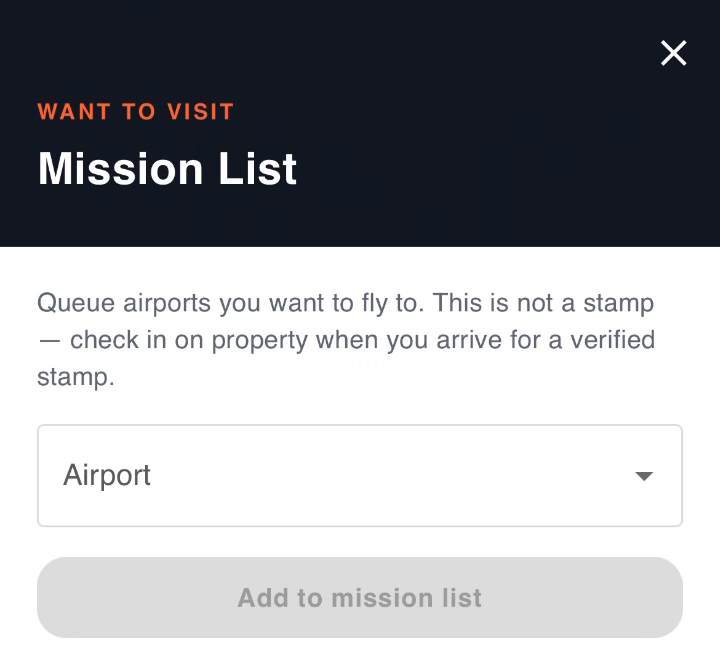
The wish list keeps future destinations separate from earned stamps.
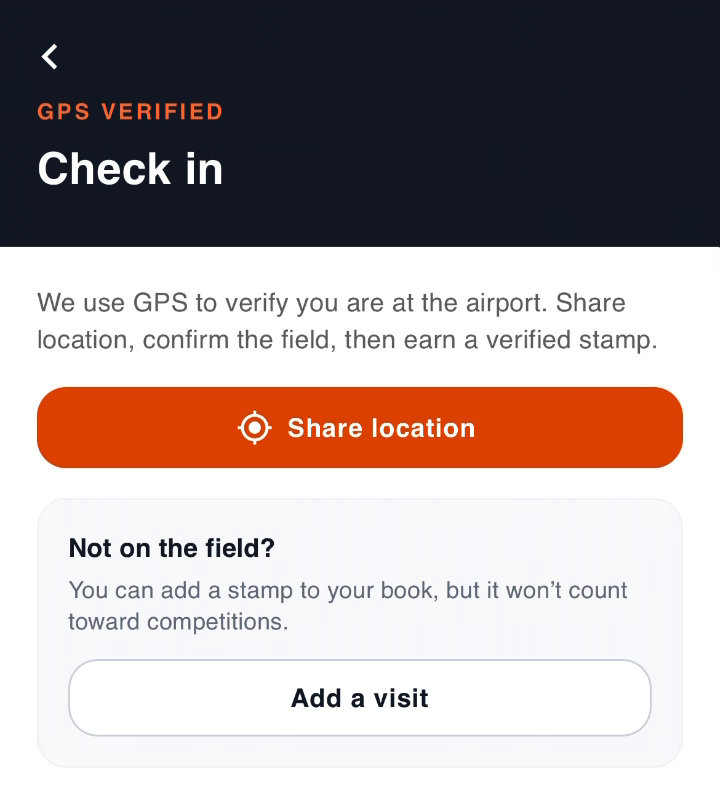
GPS check-in verifies location. Manual visits stay outside competitions.
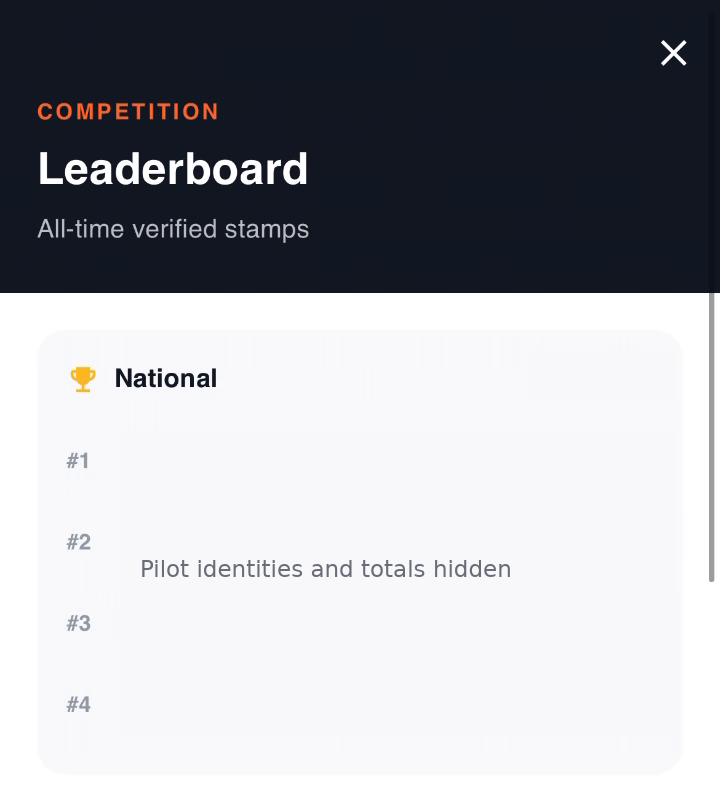
Leaderboards offer national and state views. Personal records are hidden here.
DESIGN THE PROGRAM AROUND YOUR GOALS
A successful program should bring people to more of your airports, give them a reason to stay, and make it easy for airport teams to take part.
The stamp book, Missions, and all-time leaderboards are available today. The program elements below are proposals to shape with a state partner; delivery, reporting, incentives, and responsibilities would be agreed before launch.
Propose airport discovery routes, seasonal themes, and links to fly-ins, aviation museums, or nearby attractions. Recognize a first visit and a return visit separately.
Measure: first-time participants, repeat check-ins, and saved destinations that become visits.
Agree a priority list of smaller airports and underserved regions. Rotate featured destinations so the most visible airports do not capture all the attention.
Measure: airports reached, activity by region, and the share of visits at priority airports.
Invite airport restaurants, museums, tourism offices, and nearby businesses to help build an arrival guide. Explore optional partner offers with clear funding and redemption rules.
Measure: consented visitor spending reports and partner-confirmed redemptions. Keep reported spending separate from estimated economic impact.
Confirm a reason to visit, current opening hours, fuel and fees, parking, access from the ramp, and ground transport. Assign a local contact to keep details current.
Measure: airport readiness, outdated listings, visitor feedback, and issues resolved.
Propose a simple airport enrollment checklist, reusable promotion materials, a named program owner, and a clear support route. Set the reward budget and review workload before recruiting participants.
Measure: airports enrolled, staff time, support requests, and program cost per engaged participant.
Consider safety education and community events alongside airport visits. Avoid time-pressure rewards or incentives that encourage unnecessary flights. Respect airport restrictions and local noise procedures.
Measure: agreed safety participation and community feedback. Pilots retain responsibility for every flight decision.
STATE REPORTING / PROPOSED VIEW
Plan reporting around the decisions your team needs to make: where to focus promotion, which airports need support, and whether visitors are returning.
No state program data is connected. Measures are left blank until definitions, data sources, permissions, and a reporting period are agreed. This reporting view is not a live product capability.
Choose a state and a program priority
Compare a defined baseline with the program period, accounting for seasonality, weather, and other events.
Are we bringing new people to airports and giving them a reason to return?
First-time participants, repeat visits, and saved destinations followed by a GPS check-in.
Agree the lookback period, deduplication rules, and a privacy-safe way to identify repeat participation.
| Question | Measure | Evidence needed |
|---|---|---|
| Are pilots discovering us? | Airport views and Missions saves | Agreed analytics and consent |
| Are people visiting? | GPS check-ins and unique participants | Location records; separate landing evidence if required |
| Are smaller airports benefiting? | Reach by airport and region | Priority airport list and consistent reporting |
| Do people return? | Repeat participation within an agreed period | Privacy-safe participant matching |
| Does the local economy benefit? | Reported spending and partner redemptions | Consented surveys or participating-business records |
| Is the program worth continuing? | Change from baseline and cost per participant | Program costs, comparable periods, and limitations |
GPS check-ins show location presence, not aircraft arrivals. Manually added visits do not count toward competitions. A flight-based reward needs separate landing verification and review rules.
Views, saves, and check-ins are useful signals, but do not prove additional trips or spending. Use a baseline, separate first-time from repeat visits, state survey response rates, and avoid double-counting fuel or other business revenue.
A PRACTICAL WAY TO START
Proposed rollout: begin with a manageable set of airports and agreed success criteria before considering a statewide launch.
Choose priority airports, audience, visit rules, a baseline, budget, and a named state lead. Clarify what counts as success.
Confirm local contacts and arrival information. Bring in tourism partners, agree promotional materials, and decide how questions and corrections will be handled.
Agree a limited launch period and promotion plan. Confirm eligibility, privacy, reward funding, and reporting before invitations go out.
Compare participation, geographic reach, costs, visitor feedback, and any spending evidence. Decide together what to improve, continue, or stop.
Virginia’s Aviation Ambassadors Program connects airport visits with museums, events, safety education, and recognition. PennDOT’s airport planning resources distinguish airport activity, business tenants, and visitor spending. The FAA’s economic impact framework also treats visitor expenditures as a separate source of economic activity. These are reference points, not WingJockey partnerships or endorsements.
LET’S TALK ABOUT YOUR STATE
Considering a new airport passport program, or a digital companion to an existing one? Start with your goals. We can discuss how the stamp experience might fit.
START A CONVERSATION
Tell us which state or organization you represent and what you would like the program to achieve.
Talk with WingJockeycontact@wingjockey.com
BEFORE YOU GET STARTED
This page invites states to explore participation. It does not announce a state endorsement or partnership. Any official program, terms, and responsibilities would need to be agreed with the participating state.
That is a useful starting point for a conversation. We would first review your existing rules and goals to understand how digital stamps could fit. State-specific integrations or administration tools are not promised here.
Challenges is currently marked “coming soon.” This page describes the stamp book, Missions wish list, and all-time leaderboards available today. Any future challenge format or state-specific requirements would need to be discussed separately.
No. GPS check-in verifies presence at a location, not aircraft arrival. Manual visits also do not count toward competitions. State programs that require a qualifying flight or landing need to define additional verification requirements.